Investing & retirement planning
No One Person Should Hold Up Your Retirement
By Tyler Lavoie
I'll be honest: I admired Jensen Huang. Watching him turn Nvidia from a graphics-chip company into the engine behind the AI boom was something to see. So when the news broke that one of the most admired CEOs in the country had admitted to an extramarital affair, my first reaction wasn't to pile on. It was disappointment. Then it was a reminder that brilliance and fallibility can live in the same person.
I couldn't help but think of the wisdom Uncle Ben gave Peter Parker before he passed away: "With great power comes great responsibility." The Bible gives us an even older version. Solomon was "greater in riches and wisdom than all the other kings of the earth" (1 Kings 10:23), yet his greatest weakness was lust — his wives "turned away his heart" after other gods (1 Kings 11:3–4). The wisest, wealthiest man of his day still had a blind spot. So do the people we admire most today.
What Happened
Huang admitted he had been "unfaithful" and said he takes full responsibility for the hurt he caused. Reports that the woman involved was suspected by U.S. authorities of spying for China turned a personal failure into a national security story. After days of mounting pressure, Nvidia announced he had stepped down immediately and CFO Colette Kress was named interim CEO while the board searches for a permanent successor.
Here's the part that matters for investors: there was no heir apparent ready and no clear succession plan. This caused a slide on its market shares erasing more than $550 billion in market value since the board announced its investigation on November 8.
The Risk Nobody Talks About
There's a name for this: key-person risk. When the vision, the relationships, and the market's confidence all live in one person, that person's personal failure becomes a shareholder event overnight. Part of that drop may simply be the "Jensen premium" leaving the stock, meaning the extra value investors placed on having him at the helm.
When we follow the markets, the companies, and the pioneers of our time, it's easy to fall in love with the character and charisma they bring. Steve Jobs and Apple. Jamie Dimon and JPMorgan Chase. Jeff Bezos and Amazon. We have so much conviction in their story, their mission, and what they're trying to give the world that we can become overconfident in them. We forget that there comes a time when our gladiators in the ring of business have to step down, whether by choice, by age, or by their own mistakes.
The Echo You're Probably Feeling
If your mind went straight to Elon Musk, you're not alone. CNN made the same connection this week. Tesla and SpaceX both revolve around Musk, and in its IPO filing SpaceX itself warned investors that it is "highly dependent" on his continued service.
I'm not here to predict anything about Musk or any other CEO. I'm here to ask a simple question about any company you love: what happens the day that person can't, or shouldn't, lead it anymore?
You May Own This Risk Without Knowing It
Here's the twist many retirees miss. You may own this risk even if you've never bought a share of Nvidia. As of November 10, Nvidia made up about 6.3% of the S&P 500, and the 10 largest stocks made up about 37.1% of the index.
"I own an index fund" doesn't automatically mean "I'm not concentrated." If you hold an S&P 500 fund, more than a third of that money is riding on just ten companies, and several of them are closely tied to one famous founder or CEO.
The Contrast That Proves the Point
Now look at Berkshire Hathaway. Same founder problem, handled the opposite way. Greg Abel was publicly confirmed as Buffett's successor in 2021. He spent years running Berkshire's non-insurance businesses in the open, and the handover was announced in May 2025 to take effect January 1, 2026.
Remember what happened to the stock? Even with a plan in place, Berkshire shares fell about 5% the next trading day and close to 15% over the following three months. By October 2026, they had recovered and set new all-time highs. A planned transition can still be bumpy, but there's a big difference between a bump you saw coming and a crisis nobody planned for.
Bring It Home
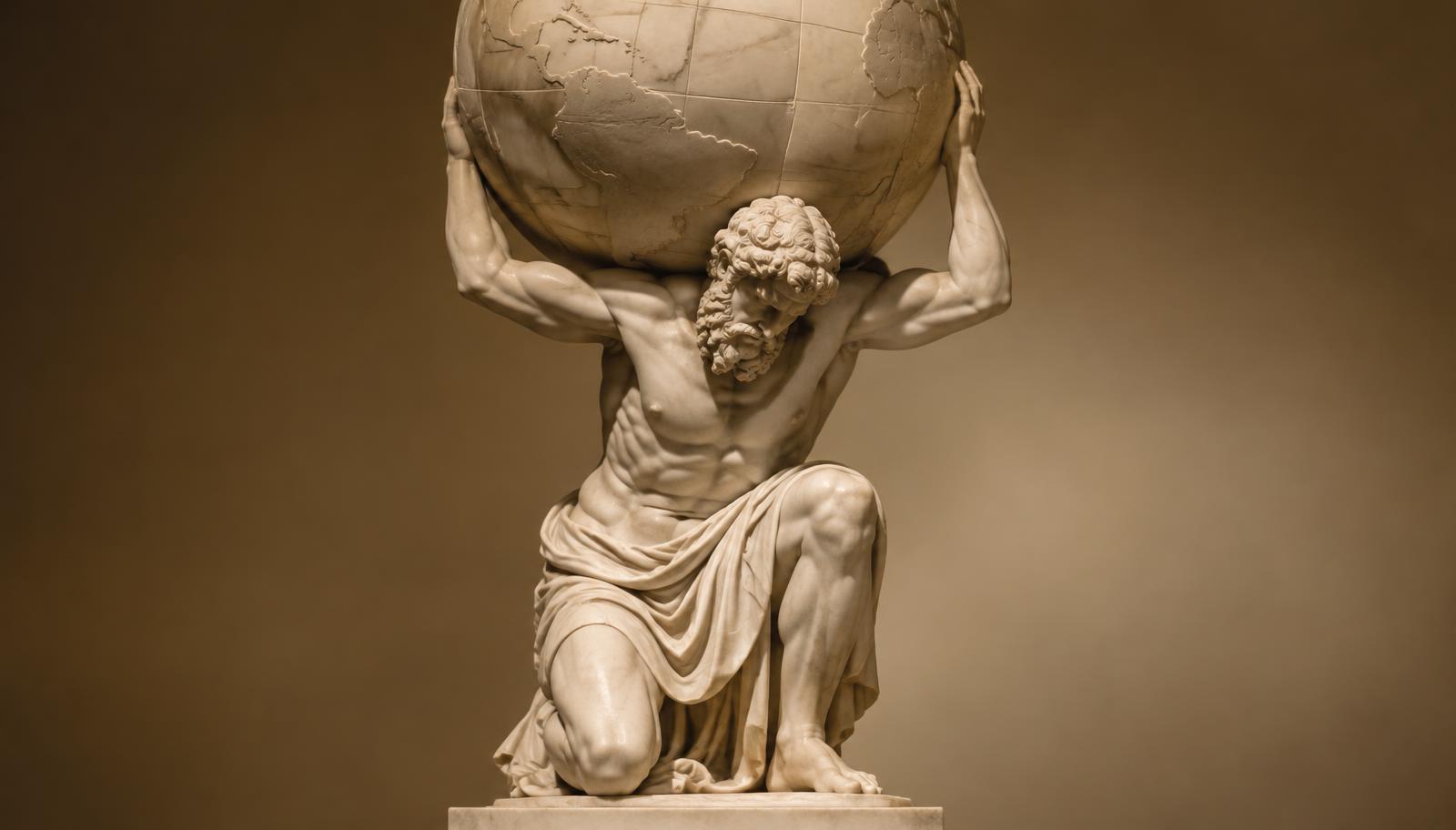
This isn't only about CEOs. Look at your own household. Does your retirement depend on one stock, one employer, one income, or one spouse who handles all the finances? That's the same single point of failure. If that one piece stumbles, everything built on top of it shakes.
Diversification is humility in portfolio form. It's admitting that none of us knows the future, and that the people we admire are human, just like us. Admire people, and learn from people, but don't build your future on any one of them, because people are fallible. All of us.
Here's to planning well and living fully.
—Tyler